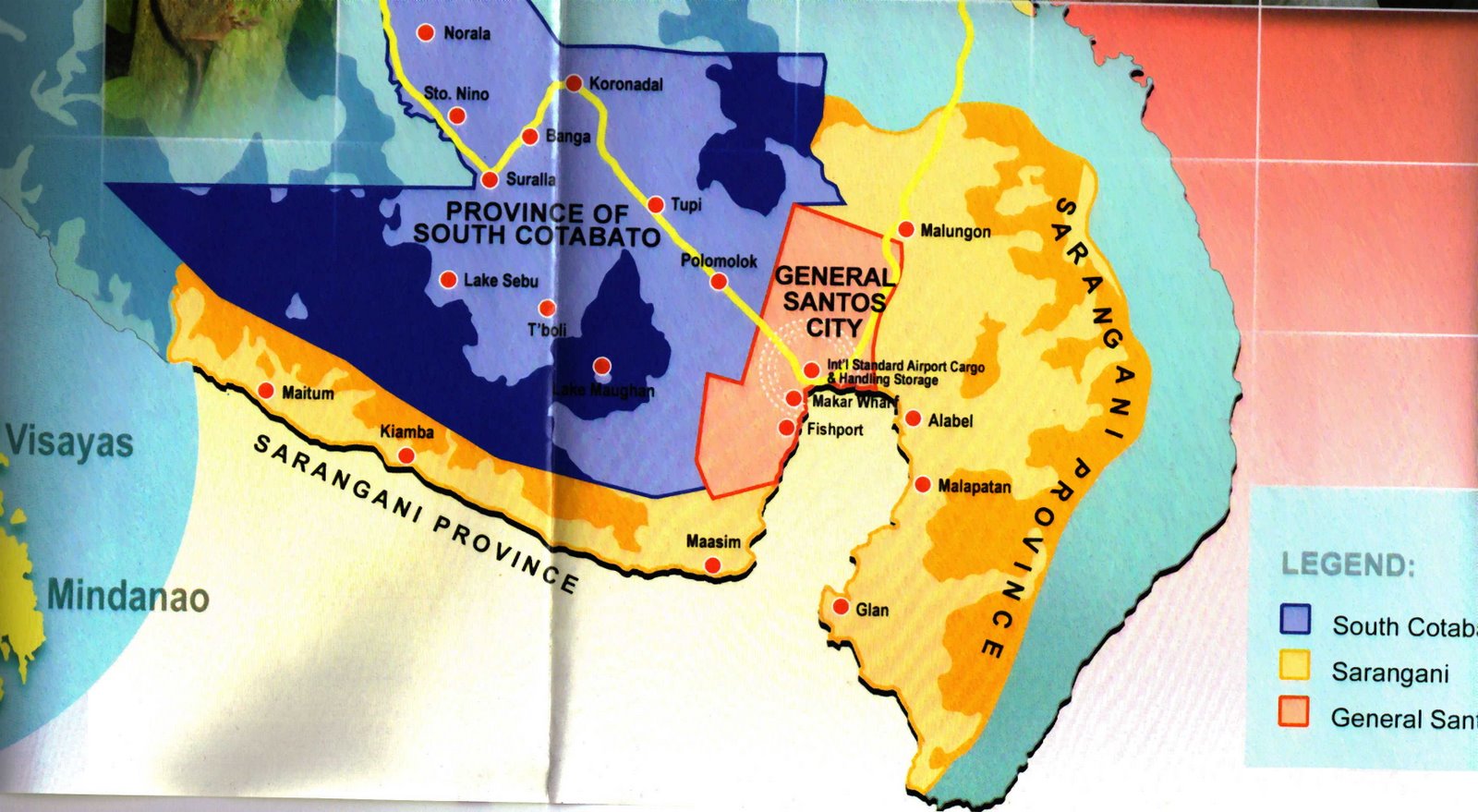
MAITUM, Sarangani (January 28, 2011) – The Edenton Mission College contingent performs and won 2nd Place during the 4th Bangsi Festival street dancing competition Friday, January 28. Their cash prize is P 25,000. The festival is named after the town’s prime product, marinated bangsi (flying fish). (Abner P. Arzaga/SARANGANI INFORMATION OFFICE)
Showing posts with label Maitum. Show all posts
Showing posts with label Maitum. Show all posts
Saturday, January 29, 2011
Dancers
MAITUM, Sarangani (January 28, 2011) – The Edenton Mission College contingent performs and won 2nd Place during the 4th Bangsi Festival street dancing competition Friday, January 28. Their cash prize is P 25,000. The festival is named after the town’s prime product, marinated bangsi (flying fish). (Abner P. Arzaga/SARANGANI INFORMATION OFFICE)


Photographers
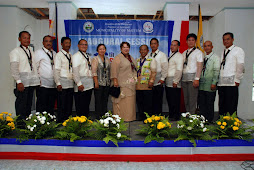
 MAITUM, Sarangani (January 28, 2011) – Participants of the 7th Maitum Safari Photo Contest pose with organizer and municipal accountant Beth Ramos Palma Gil (6th from left) during the culmination of the 4th Bangsi Festival celebration Friday, January 28. (Abner P. Arzaga/SARANGANI INFORMATION OFFICE)
Sugba-sugba sa kadalanan
 MAITUM, Sarangani (January 28, 2011) - Barangay Captain Linda Narte of Barangay Kalaong joins her constituents in grilling flying fish during the "Sugba-sugba sa Kadalanan" Friday, January 28, as one of the highlights of the 4th Bangsi Festival celebration. The festival is named after the town’s prime product, marinated bangsi (flying fish).(Cocoy Sexcion/SARANGANI INFORMATION OFFICE)
Gensan Camera Club
 MAITUM, Sarangani (January 28, 2011) - Dong Pading of Gensan Camera Club takes a break as he covers the 4th Bangsi Festival celebration Friday, January 28. Pading and other photographers from General Santos City, Sarangani and Davao City are competing in this year's Maitum Safari Photo Contest. The festival is named after the town’s prime product, marinated bangsi (flying fish). (Cocoy Sexcion/SARANGANIINFORMATION OFFICE)
Bangsi Festival street dancing champion
 MAITUM, Sarangani (January 28, 2011) - Malalag National High School won 1st Place in this year's Bangsi Festival street dancing competition Friday, January 28. The group takes home the P30,000 prize. The festival is named after the town’s prime product, marinated bangsi (flying fish). (Cocoy Sexcion/SARANGANI INFORMATION OFFICE)
Thursday, December 30, 2010
Christmas carols

 MAITUM, Sarangani (December 30, 2010) - Maitum senior citizens, led by their president, Butch Mayled, and accompanied by Board Member Bryan Reganit, sing Christmas carols to Mayor Elsie Perrett as part of their fund raising activities. (MAITUM INFORMATION OFFICE)
Tuesday, December 7, 2010
Best coffee taste
 ALABEL, Sarangani (December 3, 2010) – A member of the rural improvement club from Malungon pours her self-brewed coffee at the best coffee taste contest during the provincial women’s day Friday, December 3, at the provincial gym . Sarangani’s seven towns practically grow varieties of coffee, now becoming a main industry in the province for the world’s most marketed food commodity. (Cocoy Sexcion/SARANGANI INFORMATION OFFICE)
Thursday, October 21, 2010
Day care pupils
 MAITUM, Sarangani (October 21, 2010) - More or less 40 children go to the makeshift daycare center of sitio Angko in barangay Bati-an daily. Bati-an (population: 949) is the province’s poorest village with 99.8% of its households having income below the poverty threshold and below the food threshold. 62.1% of its households have no access to potable water. In basic education, 94.3% of Bati-an’s children 13-16 years old are not attending high school; 44.3 of children 6-12 years old are not attending elementary school; and 48.2% aged 6-16 years old are not attending school. (Beth Ramos-Palma Gil/MAITUM INFORMATION OFFICE)
Appeal of poorest village
 MAITUM, Sarangani (October 21, 2010) - Rosalito Labi, sitio Angko leader, explains to municipal councilor Gendy Strong (extreme right), who went with Maitum Advocates for Sustainable Environment team to the mountains, the difficult condition of their poor village. "We are appealing to the government to give us medicines, help our children get basic education, and help us build communal water system," Labi appealed. Councilor Strong promised to do something. (Beth Ramos-Palma Gil/MAITUM INFORMATION OFFICE)
Village teacher
 MAITUM, Sarangani (October 21, 2010) - Jabela Reyes, daycare teacher, patiently teaches sitio Angko children how to read. She started as a volunteer. Later, Rosalito Labi, a barangay kagawad, shared his honorarium with her. Now, it is the local government that pays her honorarium. (Beth Ramos-Palma Gil/MAITUM INFORMATION OFFICE)
Environmentalists
 MAITUM, Sarangani (October 21, 2010) - Members of Maitum Advocates for Sustainable Environment (MASE), composed of government and private employees, pose in the middle of their three-hour trek to sitio Angko where they conducted information and dissemination campaign on the protection and preservation of the environment. They also planted coconut seedlings, and explored the natural beauty of sitio Angko. (Beth Ramos-Palma Gil/MAITUM INFORMATION OFFICE)
Feature: A people that refuses to die
By Beth Ramos-Palma Gil
MAITUM, Sarangani (October 21, 2010) - “For a time, we thought our fate is sealed with hopelessness,” says Rosalito Labi, a sitio leader and barangay kagawad (village councilor) of sitio Angko, the sitio where we decided to spend our weekend.
This sense of hopelessness emanated from their past experiences. Government aid came few and far between if not none at all.
Sitio Angko is 15 kilometers away from the town proper and can be reached through a dirt road. From the dirt road, one has to walk three to four hours through a three-kilometer narrow trail. If it rains, the narrow trail with uphill and downhill climb becomes a one-foot deep mud ditch which makes walking extremely difficult. But the rich foliage and breathtaking view of the magical forest more than makes up the arduous journey.
This narrow trail was made through “bayanihan” by the villagers on May 2006 and was completed seven months later. They used “buyo-buyo” or sharpened wood to make the trail. Despite the trail they built, villagers still have a hard time transporting their farm produce to the poblacion. They use carabaos and horses to transport their farm produce.
Upon our arrival, we were forced to stay indoors by inclement weather. We took this opportunity to get close with the villagers, telling stories, playing with the kids, while others contented themselves looking at the foggy surroundings.
Securely ensconced on a rolling hill surrounded by rain forest, sitio Angko is home to 120 smiling, gentle, and peaceful Tboli people, who live on the edge of poverty. But villagers can proudly say that they have a zero crime rate. Their main source of livelihood is farming and hunting. Their main crop is corn. Fresh water fish is still abundant in the creeks of sitio Angko.
Angko is the farthest sitio of barangay Batian. It is also the least explored of all the six sitios of Bati-an.
Bati-an (population: 949) is the province’s poorest village according to the Community Based Monitoring System. 99.8% of its households have income below the poverty threshold and below the food threshold. 62.1% of its households have no access to potable water.
In basic education, 94.3% of Bati-an’s children 13-16 years old are not attending high school; 44.3 of children 6-12 years old are not attending elementary school; and 48.2% aged 6-16 years old are not attending school.
Labi confessed there were instances when they stopped dreaming and hoping for a bright future. “The barangay captain never visited us,” he said. Intervention from the government was hard to come by because of its distance and the difficulty in reaching the place.
Until February 2008 when the Mindanao Rural Development Program (MRDP), through the initiative of the provincial and municipal governments, started its projects in this sitio. Through their newly-formed people’s organization, the Tboli Farmers’ Association, MRDP projects were implemented but not after they were given skills training to prepare them for the projects. Rolando Delcano, an employee from the municipal agriculturist office, and the designated municipal facilitator of MRDP projects, patiently and conscientiously attended to the implementation of the projects. He goes to the area twice a month, live, sleep, and eat with them. Villagers sincerely involve themselves in the projects and in the process found themselves empowered.
“At first, people here were aloof. They just stay silent and stare at visitors. But now, they have learned to interact with other people. They learned to smile and talk to us,” says Delcano. “They also earned confidence and sense of pride from what they did for their sitio. Before, people here plant so that they have something to eat, but now, they also plant so they have something to sell,” Delcano disclosed.
The organization was given four carabaos, three horses which became five, and 12 goats which became 20. The carabaos and horses are used to transport their farm produce from the sitio to the dirt road where motorcycles will bring them to the town proper. Ten percent of the earnings in transporting goods go to the association.
Aside from the animals, MRDP also provided them with planting materials for abaca and coffee. Two hectares were planted to coffee, while 10 hectares were planted to abaca.
The coffee is about to bear fruit while they are now starting to harvest the abaca.
Representatives from the International Aid (IA) also visited them. They were promised a P25,000 worth of medicines once they built a health and nutrition post (HNP) which they did through bayanihan and from indigenous materials in the area. The HNP has been built and hopefully the P25,000 promised by the IA would come soon.
In May 2009, a solar power system was given to them by the provincial government. For the first time, villagers saw electric light on a pitch-dark night.
As the night falls in sitio Angko, myriad of fireflies light the growing darkness. The subtle beauty of wilderness at night and the chilling cold that it brings, makes sleep easy to come by. What a great break from a humdrum, busy life in the urban area.
“The biggest success of these people is their empowerment,” Delcano added.
Sitio Angko has the largest land area in Bati-an’s forestland which is 30% of the total area. Villagers are aware of the effects of “kaingin” (slash-and burn farming), illegal fishing (in the river), or illegal cutting of trees that is why these activities are discouraged in order to preserve the healthy environment. Near the proposed water spring development (funding of which is still to be sourced out), we found more or less 20 “red lawaan” trees which trunks are as big as the size of a fuel container drum.
A makeshift daycare center was built by the villagers through the help of the local government by providing materials. The honorarium of the volunteer/teacher is shouldered by the local government also. Labi said “we would be happy if the government or any funding agency or NGO help us build a permanent daycare center.”
Some of the big challenges that the villagers have to face are lack of medicines, basic education, lack of farming techniques and seedlings, and of course improvement of the narrow trail which connects them to the main dirt road.
But their most urgent concern is health and sanitation. The lack of potable water aggravates their situation. Toilet bowls given to them by the local government have to wait until a communal system will be constructed which would take a long time to be realized. More often, children are the ones who suffer from diarrhea and other water-borne diseases because of unclean drinking water. The existing water source which is a kilometer away from the center of the sitio is open and susceptible to contamination.
Sitio Angko is a strategic starting point to the many potential tourist spots in Bati-an. There is the hundred caves. Villagers told us that a cave was used to be a stronghold of the Japanese Imperial Army. Another cave, the El Kiblat Cave, just three kilometers away, has many compartments and with an upward exit. The giant staircase with flowing water, is just a kilometer away. The Dakiol Falls, five kilometers away, has a three-tier drop 50-meters each long. Its sight and sound leaves one catching his or her breath because of the heavy fall of water to the ground. Anybody who visited this place said that it is a perfect place for trekking and mountain climbing.
Villagers in sitio Angko provide a compelling testimony of a people that refuse to give up despite the odds. Labi admitted that in the past, there were times they lose hope and just accept the harsh reality; that nothing can be done to improve their situation. But like their ancestors who took care of this place for their future, they refused to give up and converted crisis as opportunities. They turned their small dreams to a reality. “Na-feel na namo ang presence sa gobyerno,” he said.
We went home refreshed and inspired by an empowered people who refuse to give up. (Beth Ramos-Palma Gil/MAITUM INFORMATION OFFICE)
Rosalito Labi, a leader of his tribe
MAITUM, Sarangani (October 21, 2010) - Rosalito Labi’s parents were born in Angko village. In the late 60’s, his family moved to barangay Baningo, now barangay Ned of Lake Sebu, South Cotabato.
In Ned, he became a Tboli chieftain and supervisor of the Alternative Learning Center. In 2005, Labi, now with a family of his own, returned to his roots in sitio Angko.
In sitio Angko, he found the houses of his relatives far from each other. He encouraged them to transfer their houses near to each other so that they will be recognized as a sitio. Soon after, the two original houses mushroomed into 30, thus sitio Angko was born.
There is no sign of progress in this sitio – no electricity, no potable water, help from the government is nil because of the distance and the difficulty in going there.
Mulling over their pitiful situation, Labi, a father of 9 children, called for a meeting with his tribe and told them, “Nothing will happen to us if we just resign to our fate. We must think of positive things that could possibly change our destiny. Your problem is my problem too. The problem of your children is the problem of my children too. Why can we not unite and plan for our future?” Labi told them. They all agreed.
In that meeting, Labi asked the villagers their concerns and identify the most urgent ones. The villagers unanimously agreed that they need to build a trail that would connect them to the dirt road. If they built a trail, there is a big chance for them to bring down their crops for selling in the town.
On May 27, 2006, they started building a trail. They used “buyo-buyo” or sharpened wood. They did this during Saturdays and Sundays. Labi tearfully recalled how they worked even with empty stomach as long as they can build the trail. Every able-bodied villager contributed to the construction of the trail. Each was given equal portion of the trail to work on. “We proved to ourselves that walang imposible kung magkaisa kami,” Labi said.
In 2007, with prodding from the residents in sitio Angko, he ran as barangay kagawad for Bati-an and handily won.
He continued leading his people. With the “bayanihan spirit” as their best weapon, they built a waiting shed beside the dirt road so that when it rains, their farm produce will not get wet while waiting for a motorcycle to bring them to town. Later on the waiting shed became a resting place for travelers from Tuanadatu and Ned.
To boost their farm production, Labi led the construction of a nursery makeshift building where they propagated coffee, banana, and other seedlings which were later on distributed to the residents. This helped increase their income.
Labi was also concerned about the future of the children. So he requested his married daughter, a high school graduate, to teach children how to read and write. A vacant space in their house was used as classroom to more than 30 daycare children. But if there are visitors, the children would look for somewhere else where they could continue their learning.
“I bought a blackboard from my honorarium as barangay kagawad, Labi said. I gave half of my honorarium to my married daughter as her honorarium too for teaching the children.” Labi believes that “yung galing sa tao dapat ibalik sa tao.” So he spends most of his honorarium for the villagers. The local government gave paper pads, pencils, and other school supplies, while the Indigenous Peoples Development Program of the provincial government gave teaching materials. Now, it is the local government which pays the honorarium of the volunteer teacher.
“The International Aid (IA) came to sitio Angko. We were told to build a Health and Nutrition Post or HNP. Again, we built an HNP through “bayanihan”. IA gave two weighing scales and BP apparatus for the HNP. We were promised medicines worth P25,000 and we are hoping the medicines would come soon,” Labi said.
Their struggle is far from over. There are still a lot of things to be done. But Labi, an elementary graduate, believes that if they unite, nothing is impossible and that his sitio will rise above poverty.
Today, Labi can look back with nary a trace of bitterness but pride. (Beth Ramos-Palma Gil/MAITUM INFORMATION OFFICE)
Monday, October 18, 2010
Tboli choir
 MAITUM, Sarangani (October 18, 2010) - Tboli youth regale the audience during the celebration of Indigenous Peoples Sunday, October 17, with their Tboli songs during the Holy Mass. (Beth Ramos-Palma Gil/MAITUM INFORMATION OFFICE)
IP rights advocate
 MAITUM, Sarangani (October 18, 2010) - Fr.Michelle Tacoque, Sto. Nino Parish Priest, gives a certificate of appreciation to Sr. Maria Fe Rollo, SMSM, for her effort in sharing her ideas about the Indigenous Peoples (IP) Sunday celebration October 17. Looking on are officers of the Parish Pastoral Council. (Beth Ramos-Palma Gil/MAITUM INFORMATION OFFICE)
Indigenous Peoples Sunday
 MAITUM, Sarangani (October 18, 2010) - A Holy Mass is celebrated by Fr. Michelee Tacogue during the Indigenous Peoples Sunday celebration October 17. The Holy Mass was attended by a thousand Tbolis in sitio Antam, barangay Upo. Maitum celebrated the Indigenous Peoples Sunday with a program, parlor games and a hearty lunch. (Beth Ramos-Palma Gil/MAITUM INFORMATION OFFICE)
Village leader
 MAITUM, Sarangani (October 18, 2010) - Rosalito Labi, sitio Angko village leader, explains to visitors how villagers beat hardship and poverty in sitio Angko by being united and focused. Labi is a Tboli chieftain and supervisor of the Alternative Learning Center in his sitio which has no electricity and no potable water. Help from the government is nil because of the distance and the difficulty in going there. (Beth Ramos-Palma Gil/MAITUM INFORMATION OFFICE)
Senior citizen tourists
 MAITUM, Sarangani (October 18, 2010) - Some 60 members of the Confraternity of the Passion of Jesus of General Santos City take a break from their religious activities to experience the beauty and nature of Maitum Sunday, October 17. Most of the members are senior citizens. (Beth Ramos-Palma Gil/MAITUM INFORMATION OFFICE)
Saturday, October 9, 2010
Senior citizen's rondallla
 MAITUM, Sarangani (October 9, 2010) - Members of the Maitum Senior Citizens' Rondalla perform their best during the Senior Citizen's Day celebration Friday, October 8, at the Maitum Gymnasium. Every year, senior citizens of this municipality converge to share experiences and show off their talents in singing and dancing and share a hearty lunch. More than 200 senior citizens joined the celebration. (MAITUM INFORMATION OFFICE/Afren de Guzman)
Singing grandmas
 MAITUM, Sarangani (October 8, 2010) - Senior citizen delegates from barangay Maguling win first prize in the choral contest with their medley of Visayan, Ilocano, and Tagalog songs during the Senior Citizen's Day celebration Friday, October 8. This is the second time they won the choral contest. (MAITUM INFORMATION OFFICE/afren de Guzman)
Subscribe to:
Posts (Atom)